Description
The St. Paul’s Hospital project is an urban planning project where we question how St. Paul’s Hospital can be re-imagined from a tradition of pathology and treatment to a condition of prevention, support, and the notion of community locally and abroad. We propose joining community programming alongside healthcare services operating concurrently at both sites. An emphasis on preventative care and palliative theory of long-term management of chronic ailment are key attitudes taken in developing spatial relationships with the community. Our proposal investigates different architectural typologies and types such as the colonnades, courtyards, landscapes and different streetscapes acting as “tools” from a larger “tool box,” potentially allude to a method of future development.
Site
The primary site of development is located in the False Creek Flats area, just off of Main Street and Prior Street.

Process
In our process we investigated architectural elements at different scales to further understand the spatial qualities that they can create. Starting with the larger scales of the streetscapes, moving down to landscaping, courtyards and to the colonnades
Streetscapes
The three different conditions derived are the avenue, laneway and the pedestrian only street.
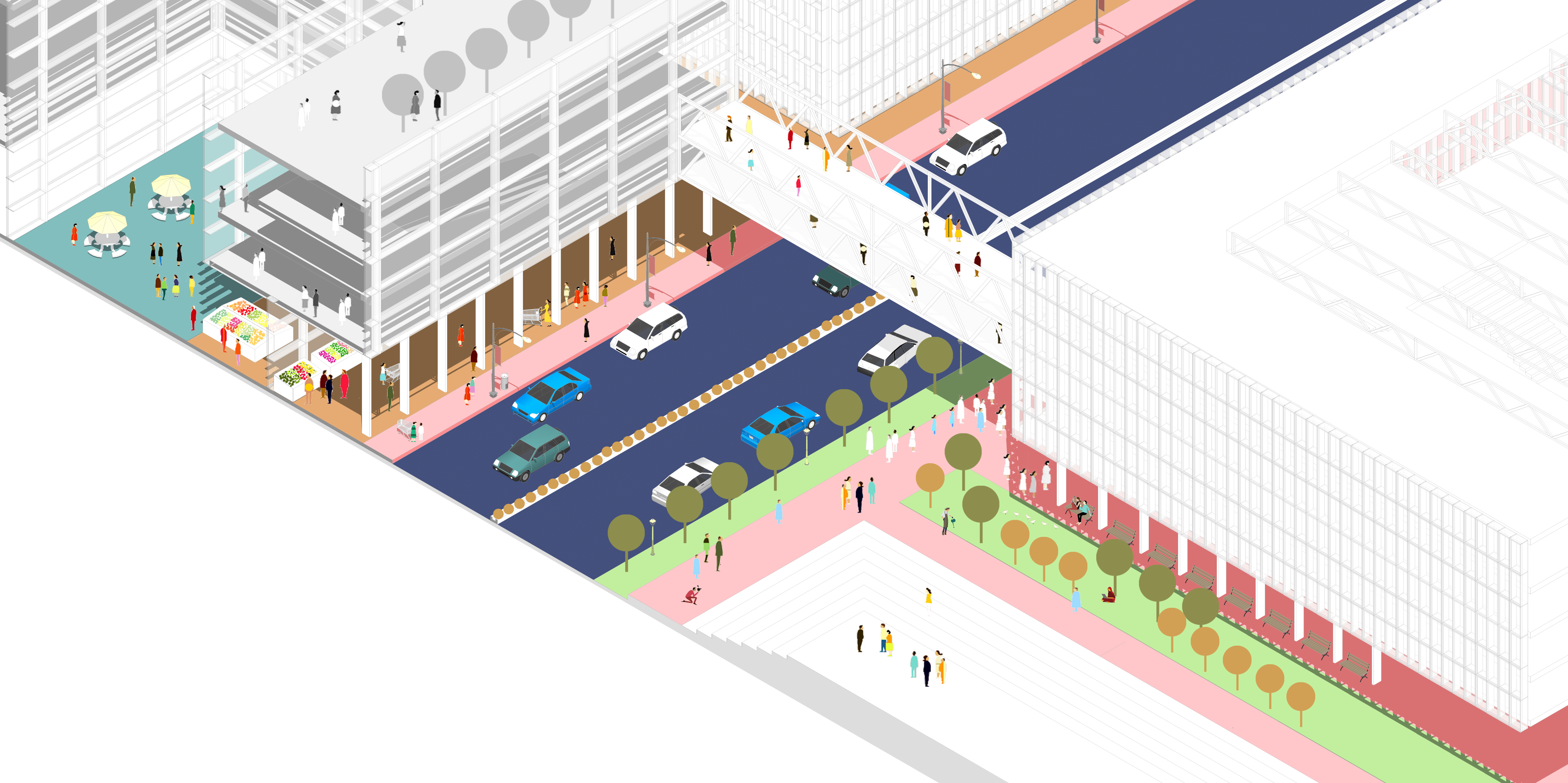
The Avenue: A four-lane way, which is the arterial road that carries the main traffic load through our site.
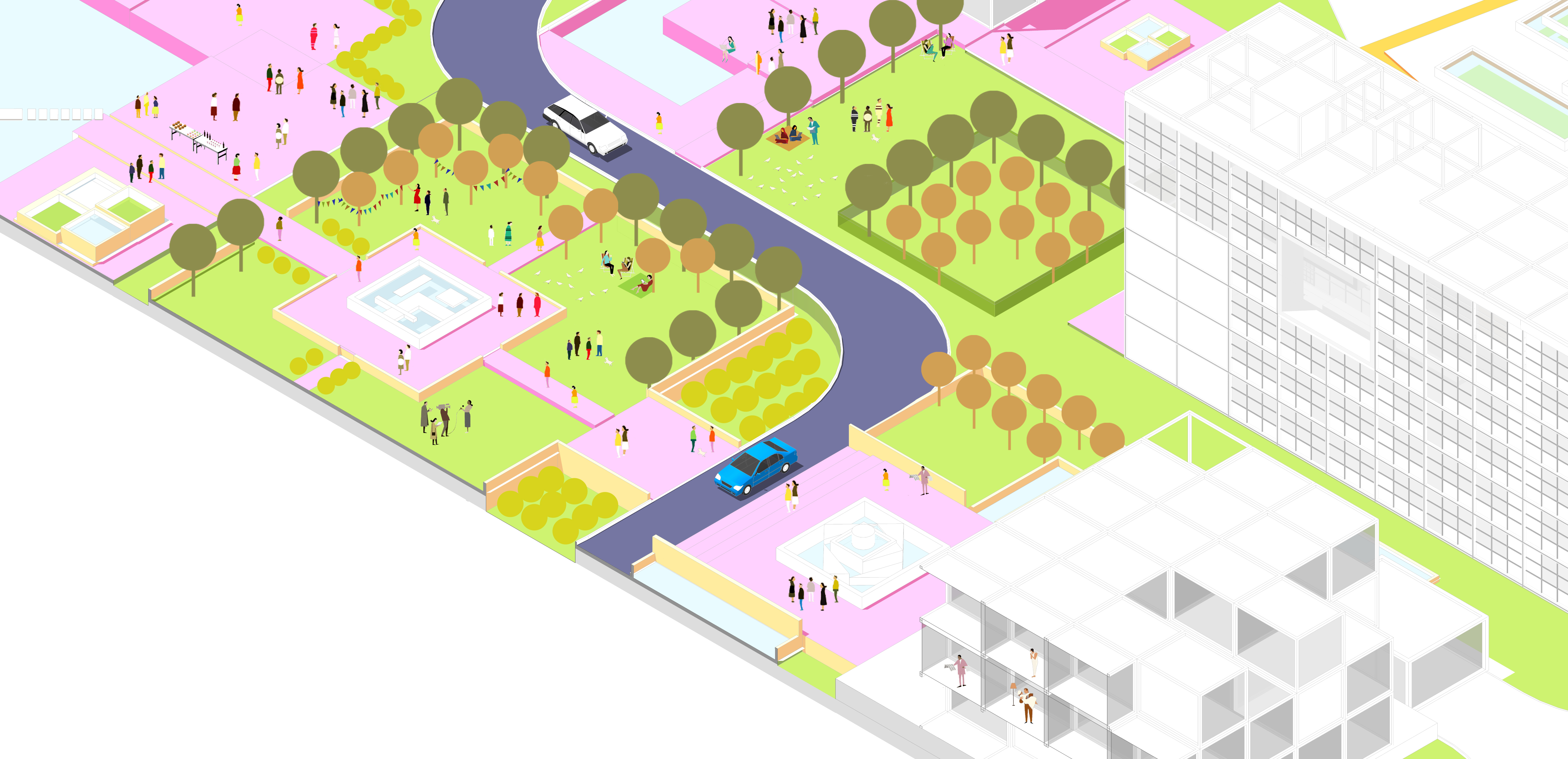
The Laneway: A one-way lane, which gives access to the quieter residential areas.
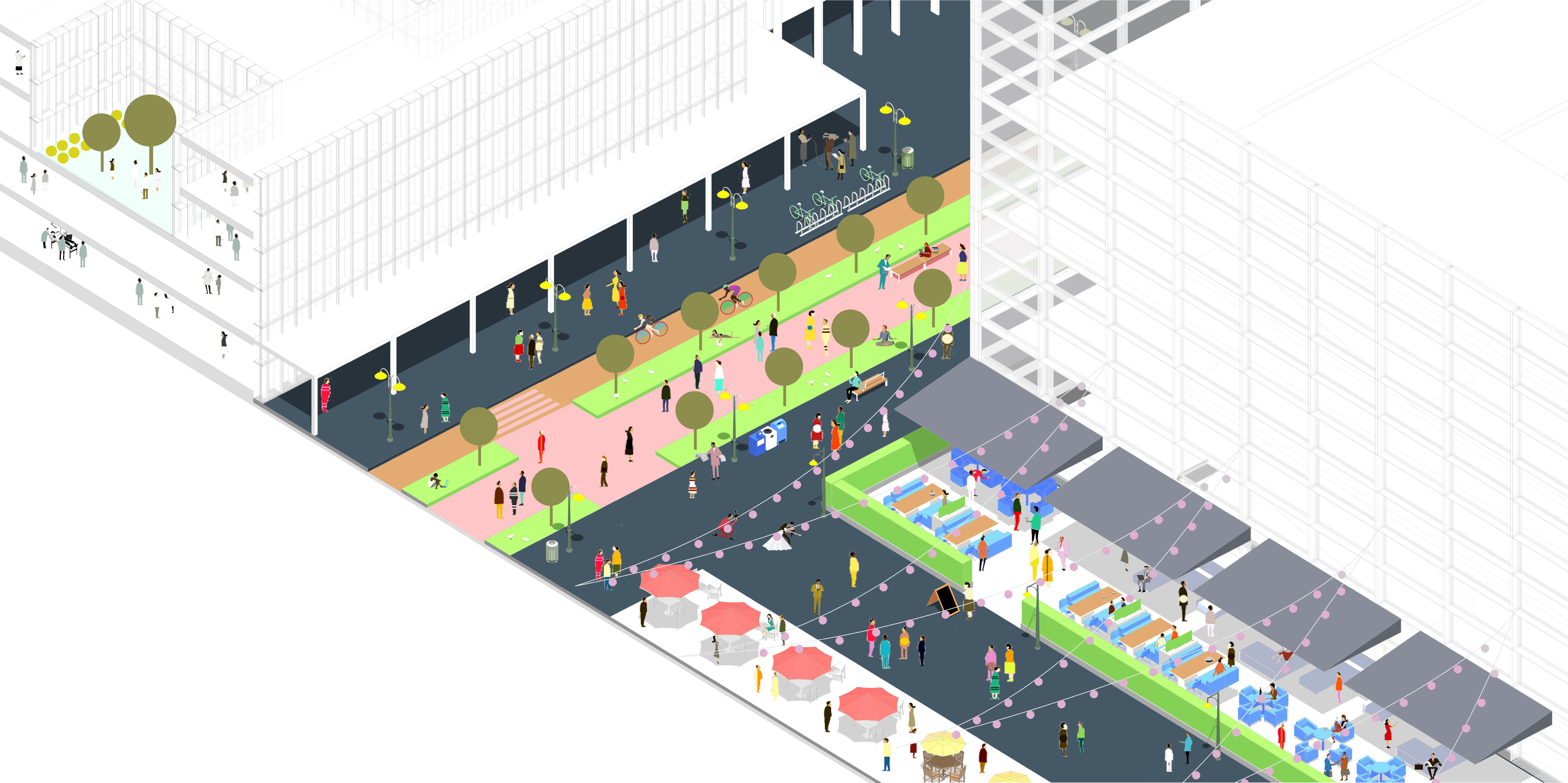
Pedestrian-Only Streets: Used as a means of inviting the community onto the site whilst promoting health by encouraging walking, cycling and other active modes.
Landscaping
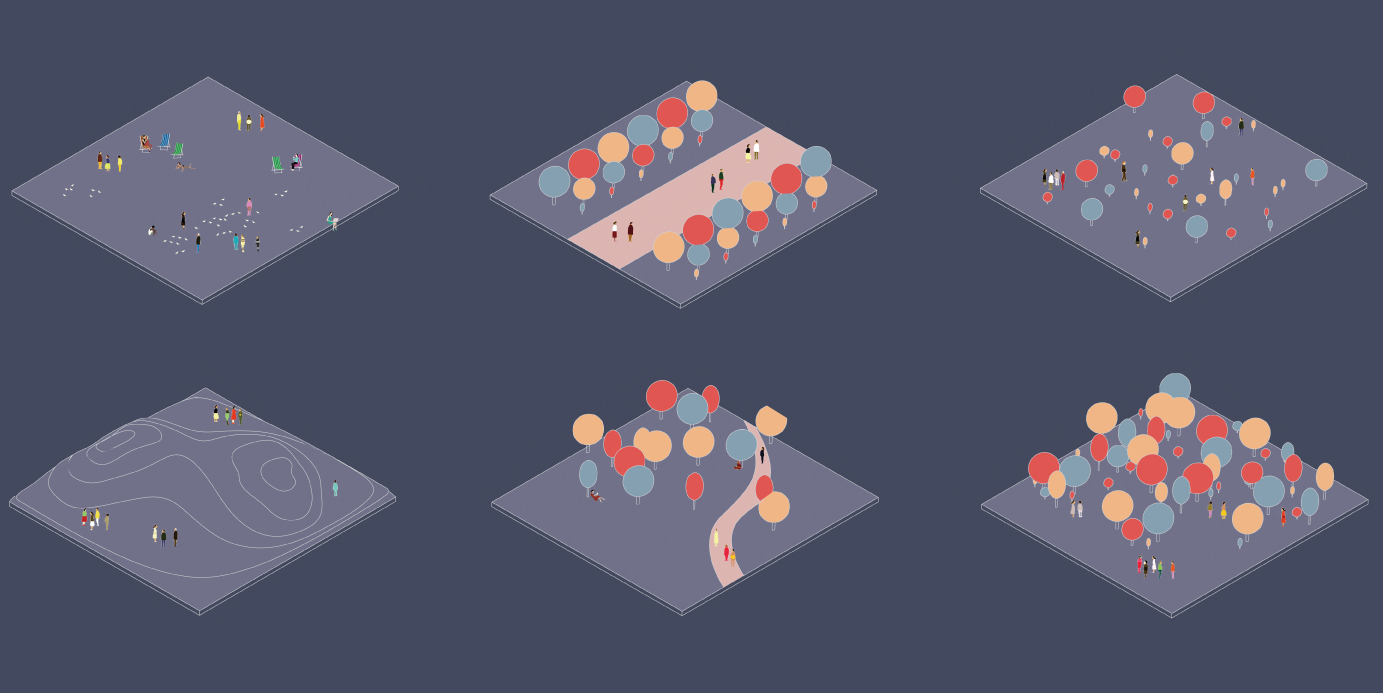
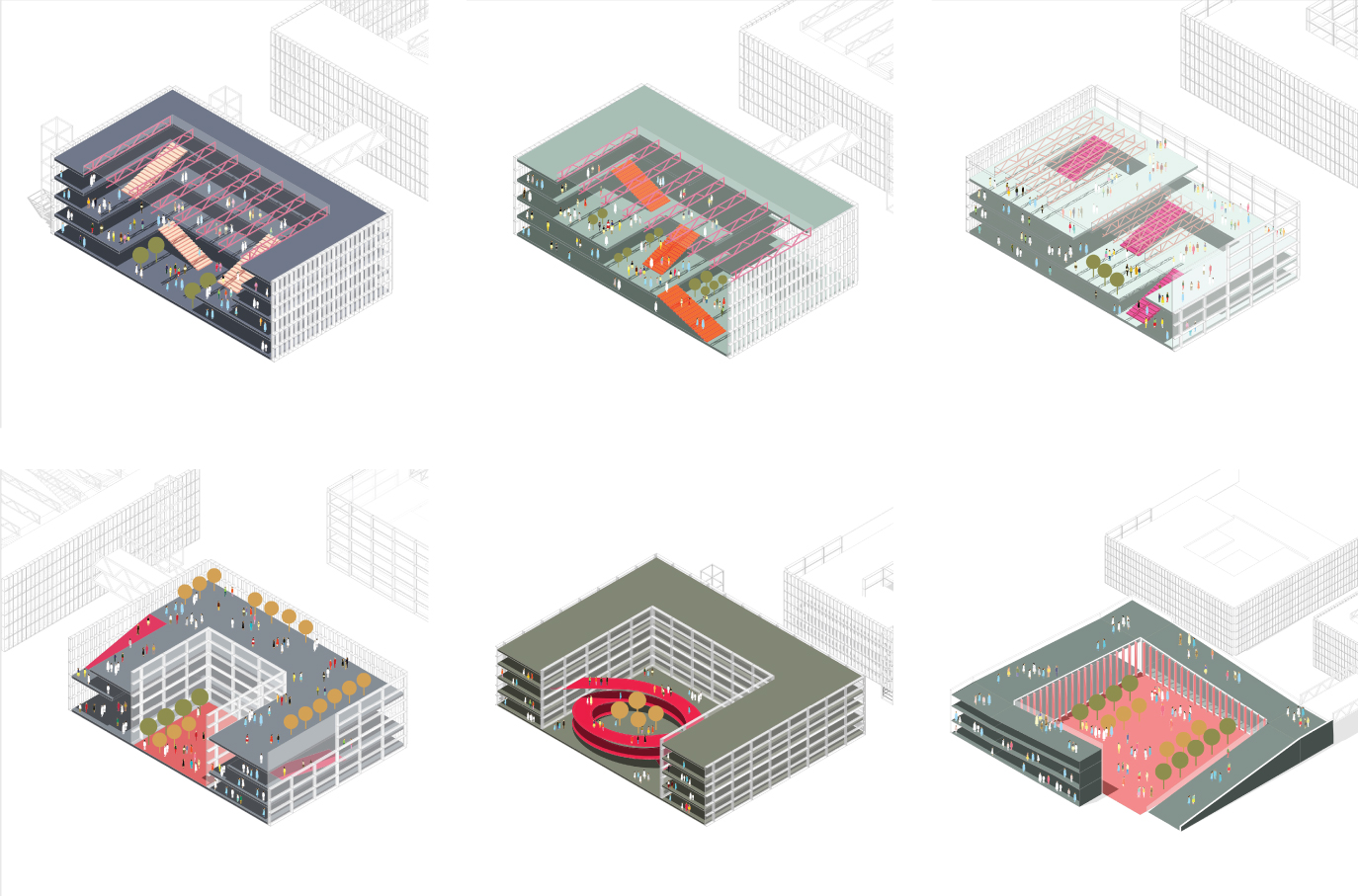
Landscaping can be used as an antidote to stress, inspire physical activity and facilitate the interaction between people and places. This investigation looked at the difference between flat and varied topography, as well as regulated pathways and trails. Furthermore looking at how heights of plantations can be utilized to promote both private and public places.
Courtyard
The courtyard typology affords for ample amount of natural light to penetrate into the facility, thus making it a prime candidate for the hospital typology. We also played with the idea of interior and exterior courtyards, and circulation as a method to define public, semi-public and private spaces in the hospital.
Colonnades
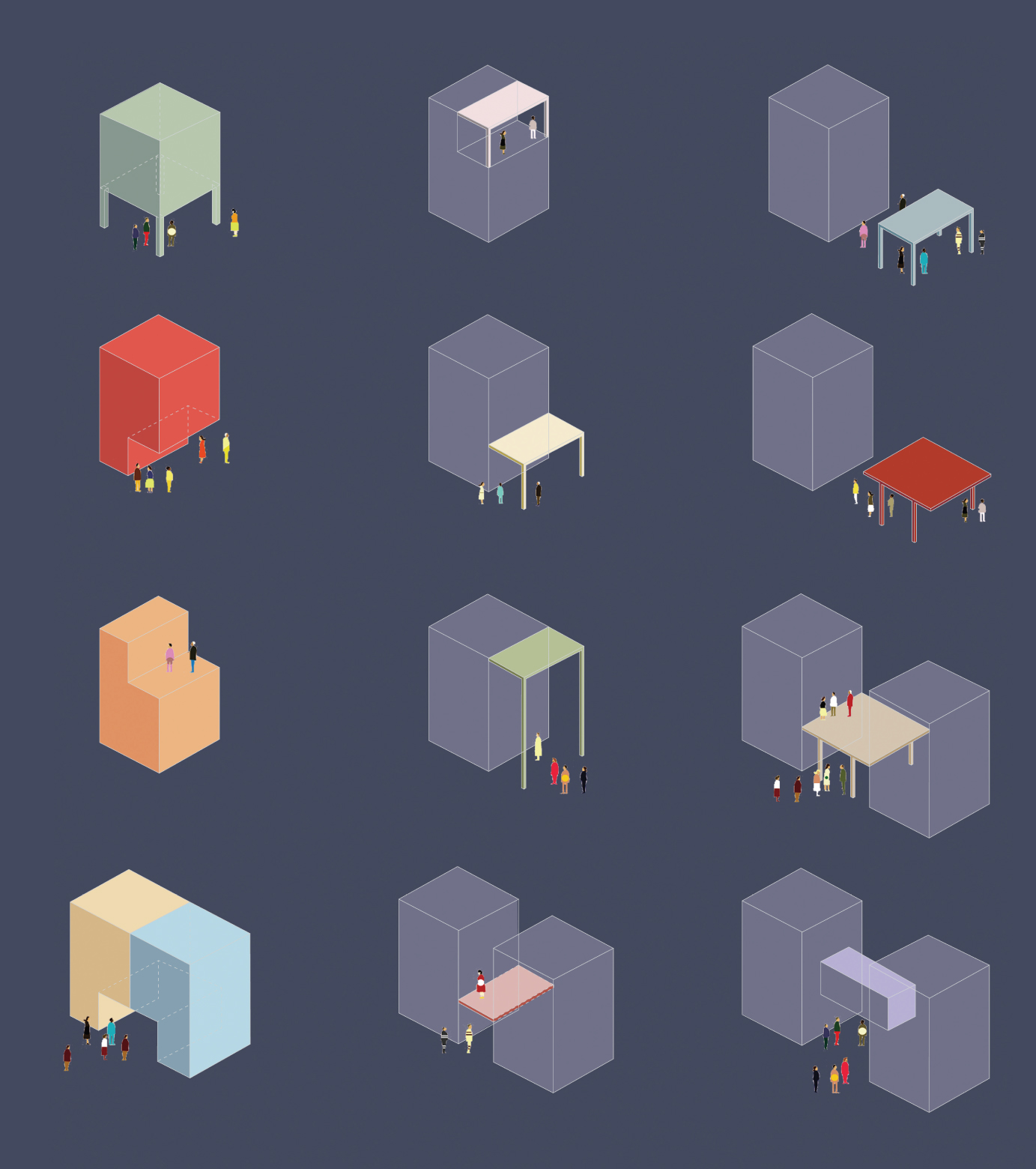
The colonnades can be used as mediation between interior and exterior space, a connection between two buildings, or simply a stand-alone public shelter giving back to the community. Or in more extreme cases a bridge between two buildings, using the buildings as columns, creating an interior condition as well as a sheltered exterior condition underneath.
Hospital
Given our goals of better situating the hospital into the community, the hospital has a smaller footprint. This light touch allows us to create a porous environment, which would free the ground floor, fostering an inviting environment and allow the general public access to the hospital.
Inherently the hospital has a smaller community, which it serves. Thus we established a layer of community situated on the third floor, which connects the whole hospital. This gesture also then becomes the sheltered space for the permeable ground floor.

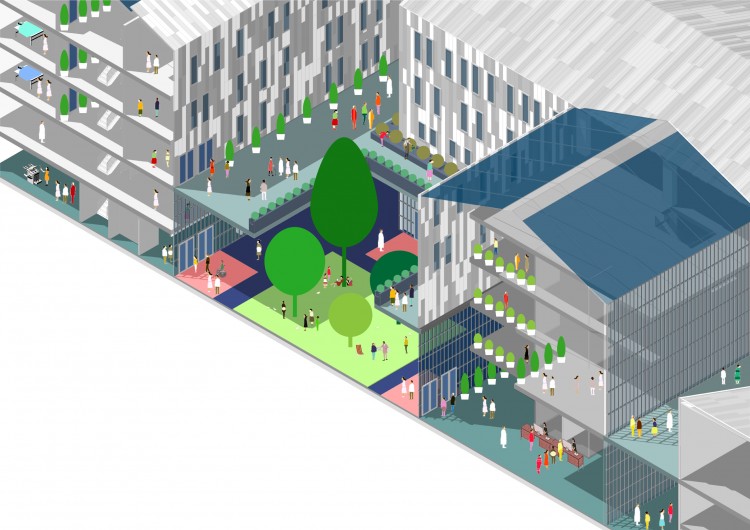
This axonometric showcase the transition between interior and exterior spaces as well as the different layers of community established.
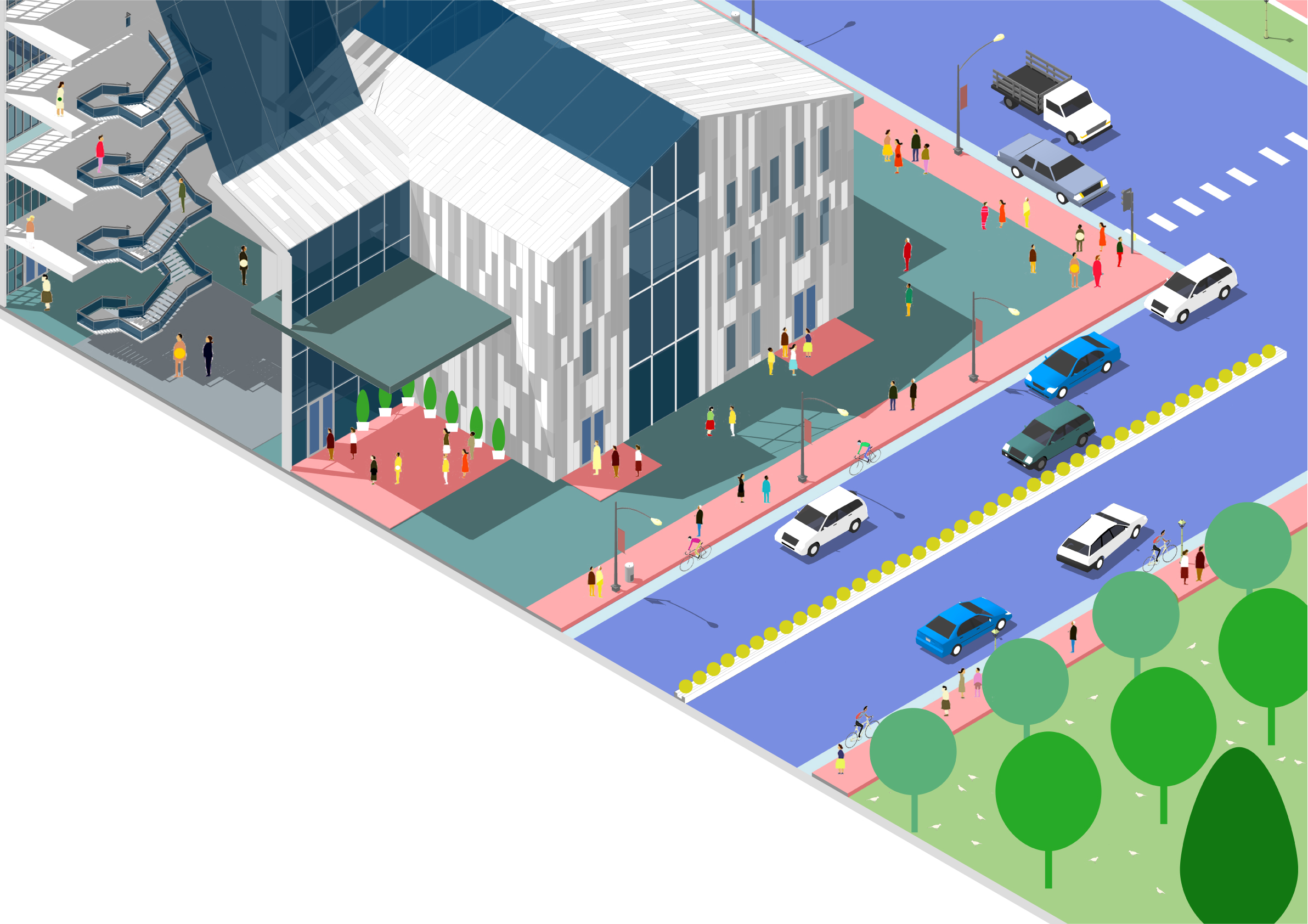
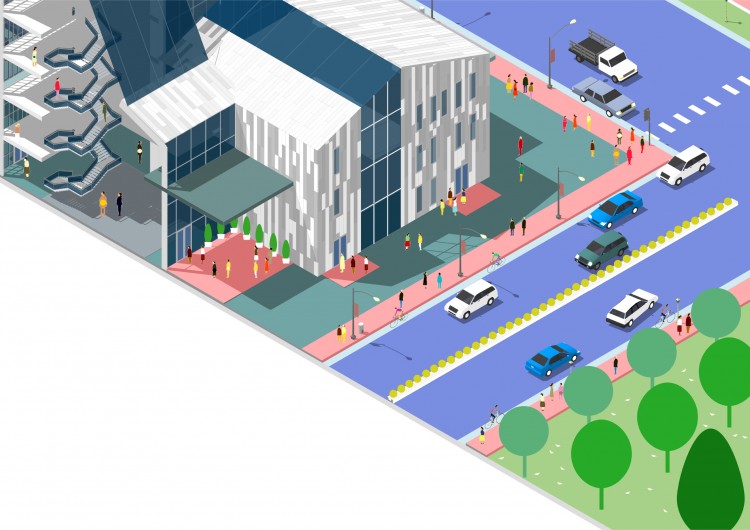
This axonometric looks at how the hospital meets the street, showcasing the entrances and circulation.
Community Centre
The community centre acts as a medium between the hospital and the Strathcona community. It is used as a place to gather, promote health and wellness, as well as preventive care. Its proximity to the hospital allows it to play a vital role with rehabilitation, helping those transitioning back to health.
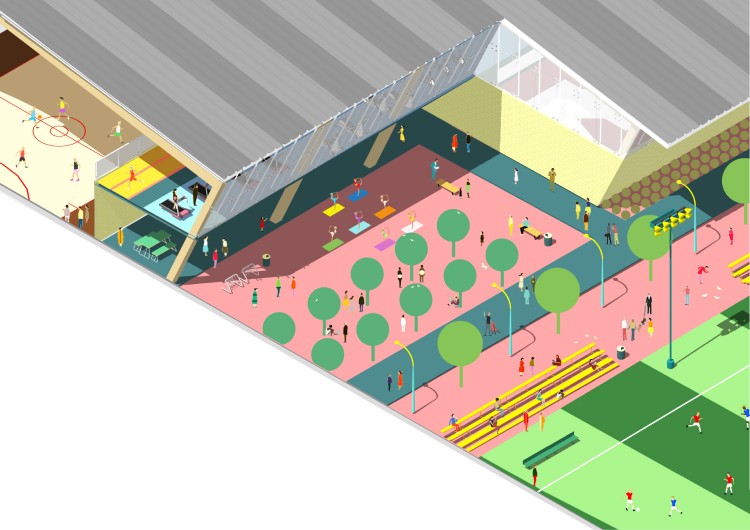
This axonometric showcases the multipurpose gym overlooking the existing soccer field. On the second floor, a track spans the perimeter with space, which affords for physiotherapy.
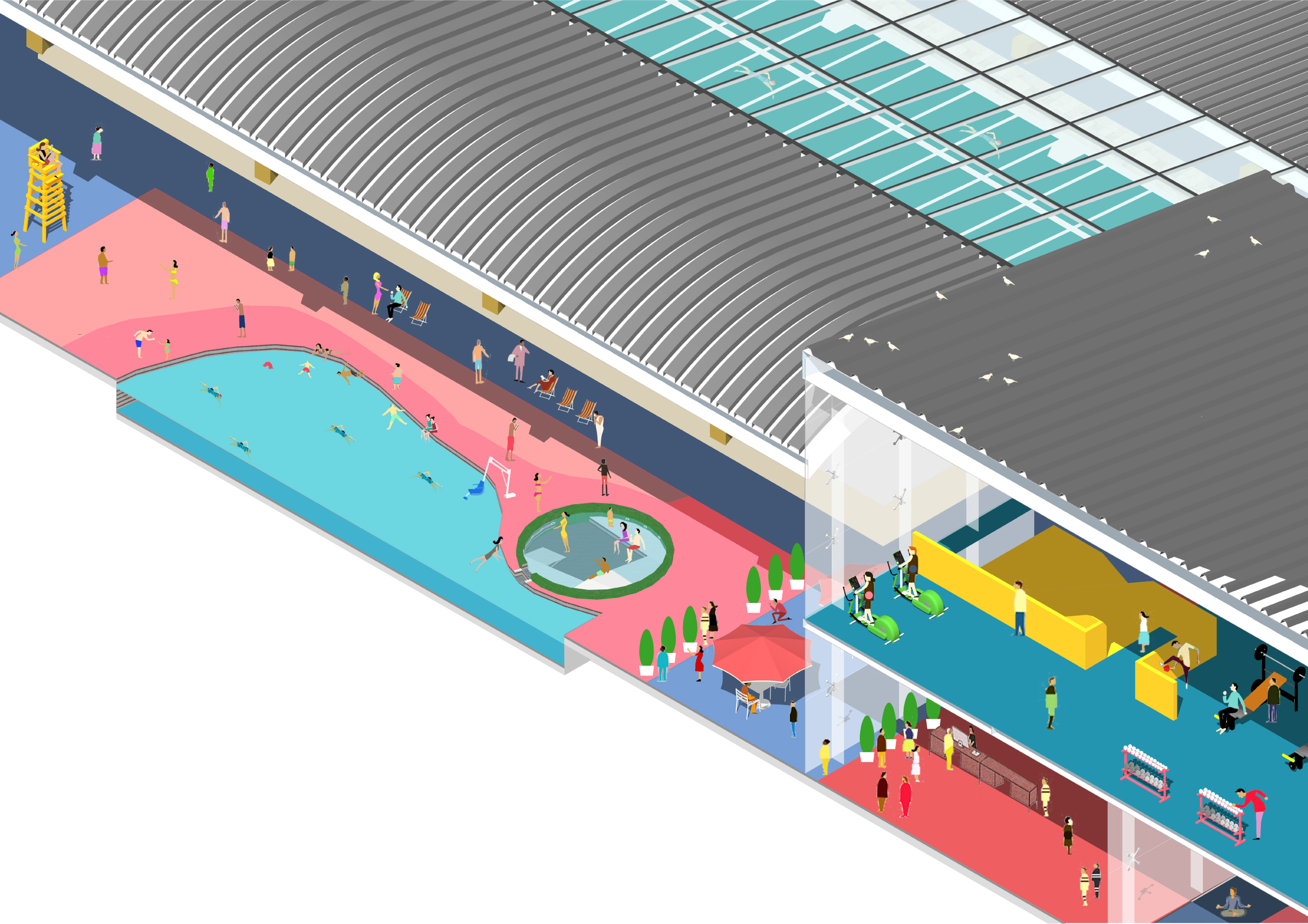
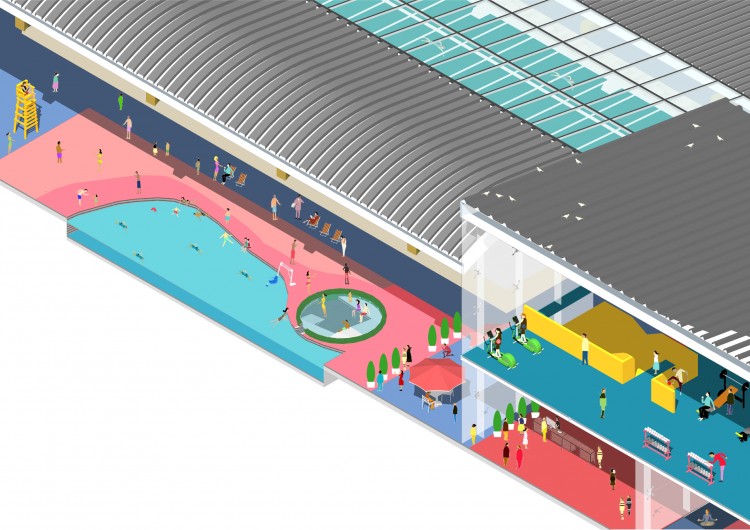
This axonometric showcases how the gym bridges the swimming pool with the multipurpose gym.
Program
Our programmatic allotment divides the provided program between both sites. Approximately two thirds of the original hospital program will be situated at the False Creek Site. Character, via program allocation and site analysis, was given to each site as a way to define and establish significance to each. The False Creek site distinguishes itself through acute care alongside advanced research, mental health facilities and community outreach; while the Burrard St. Site is defined by clinical outpatient care and low-risk maternity hospital, and walk-in clinic.
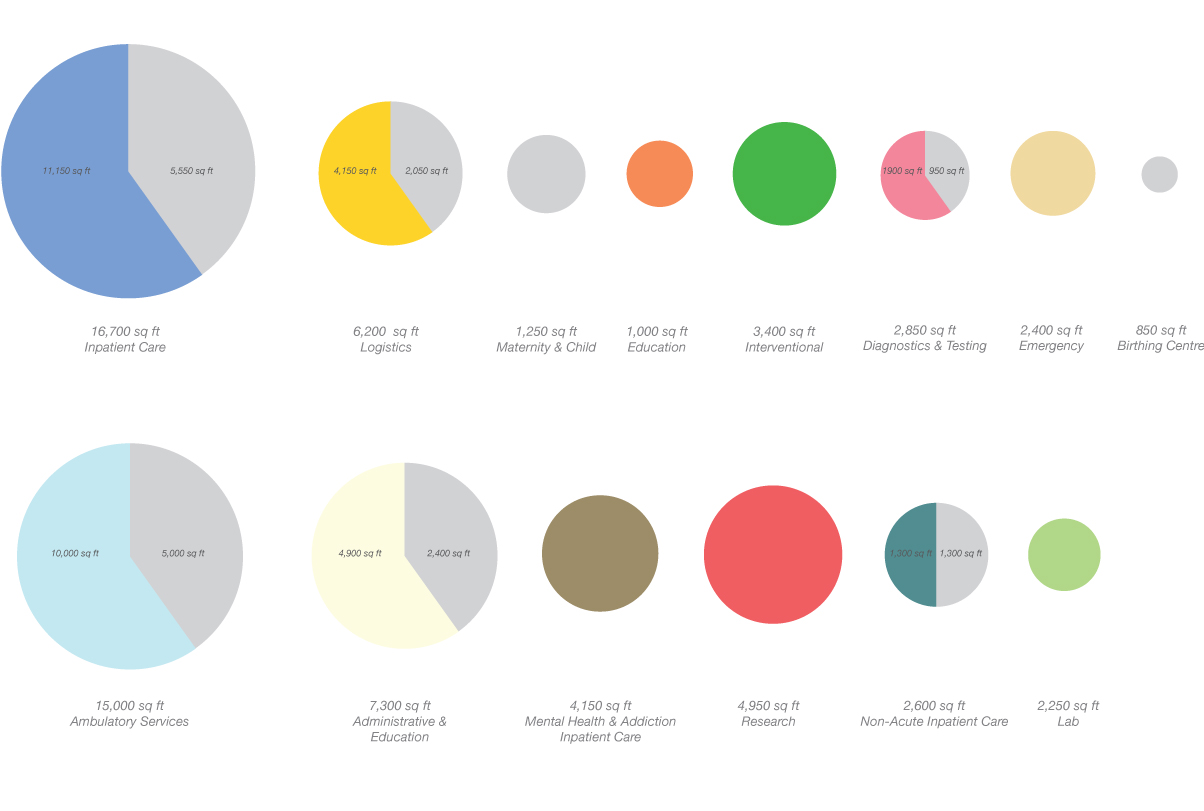
Note: The coloured portion of the circle is the amount of program given to the False Creek site, where the grey portion is the amount that will stay at the Burrard site.
Added Program
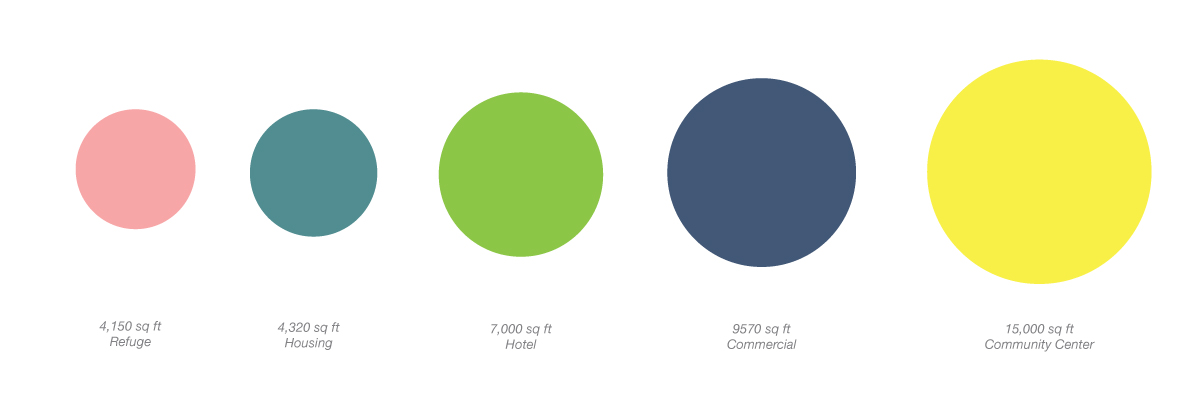
With parts of the program staying at the Burrard site, we began to add program to the False Creek site.
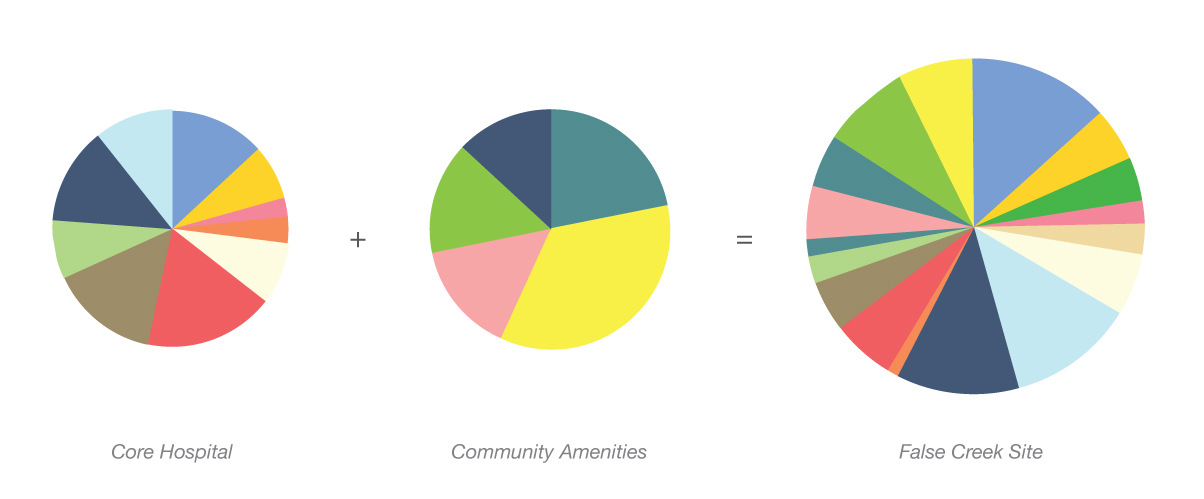
Final Program Allotment
The False Creek site is thus composed of both core hospital program as well as added community program.
Credit:
Weiwei Fan, Sarah Sako, Nicole Tischler