



Description
The All Nations Gathering Place stemmed from a feasibility study done in conjunction with Evans Architecture, BC-Non Profit Housing association, the Fraser River All Nation Aboriginal Society and the broader community of Maple Ridge and Pitt Meadows. The intent of the collaboration was to utilize participatory design methods to design a gathering space with the community, for the community.
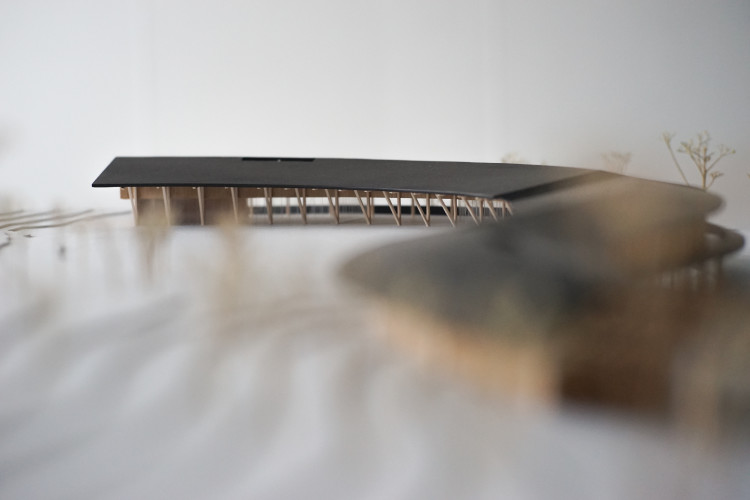
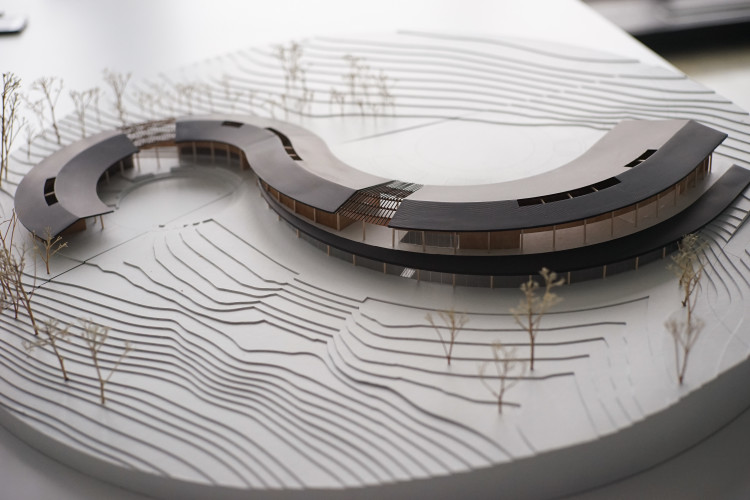
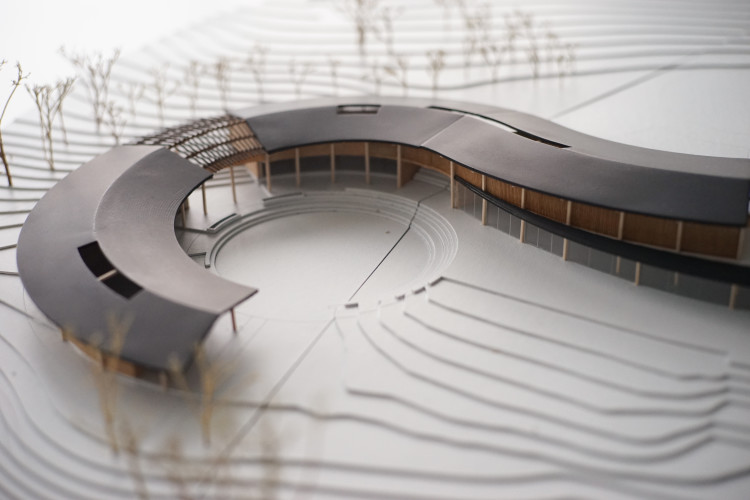
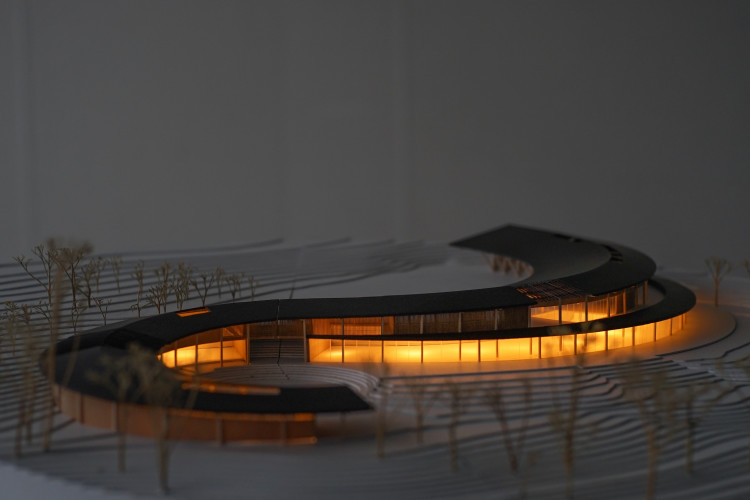
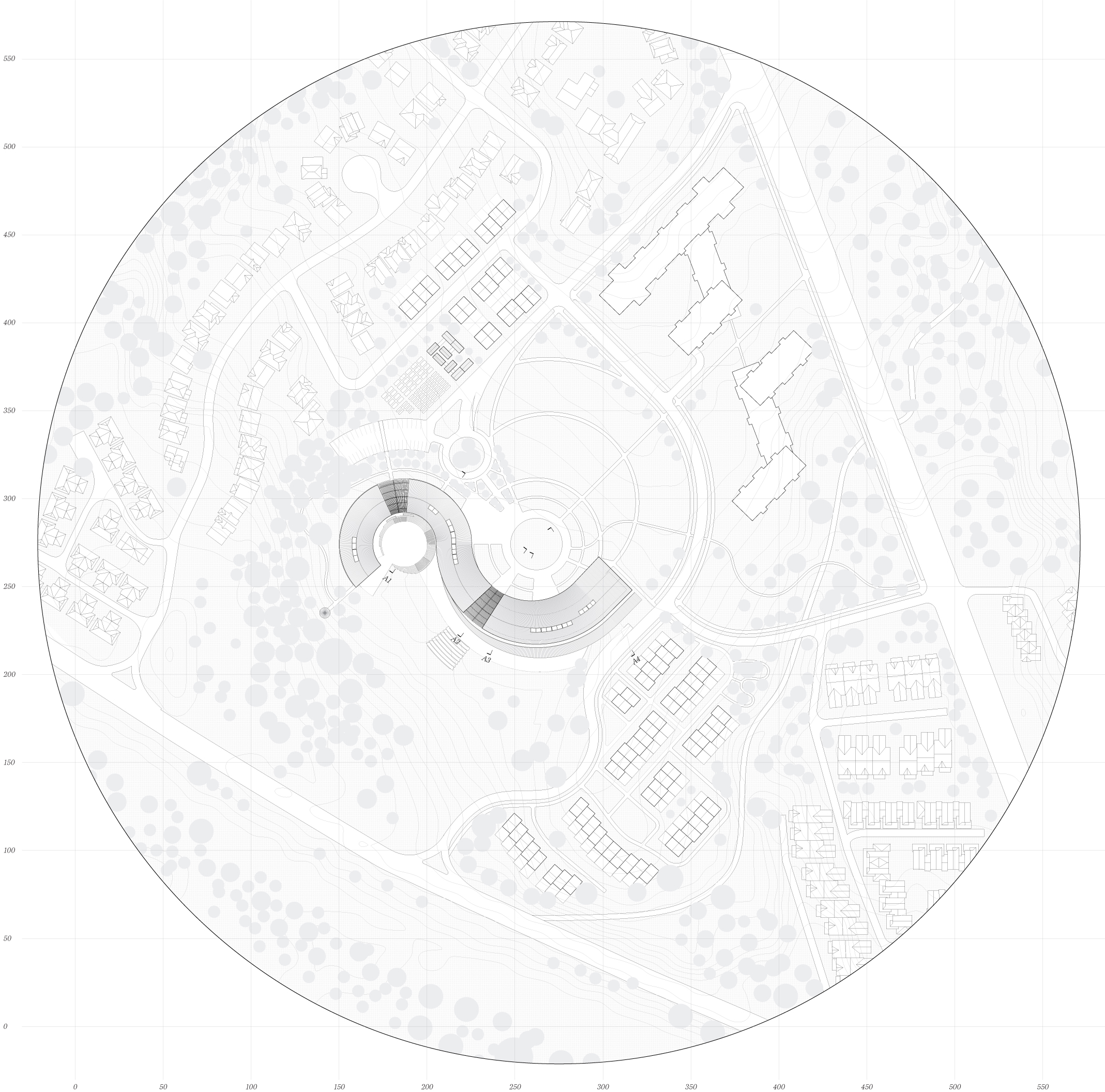
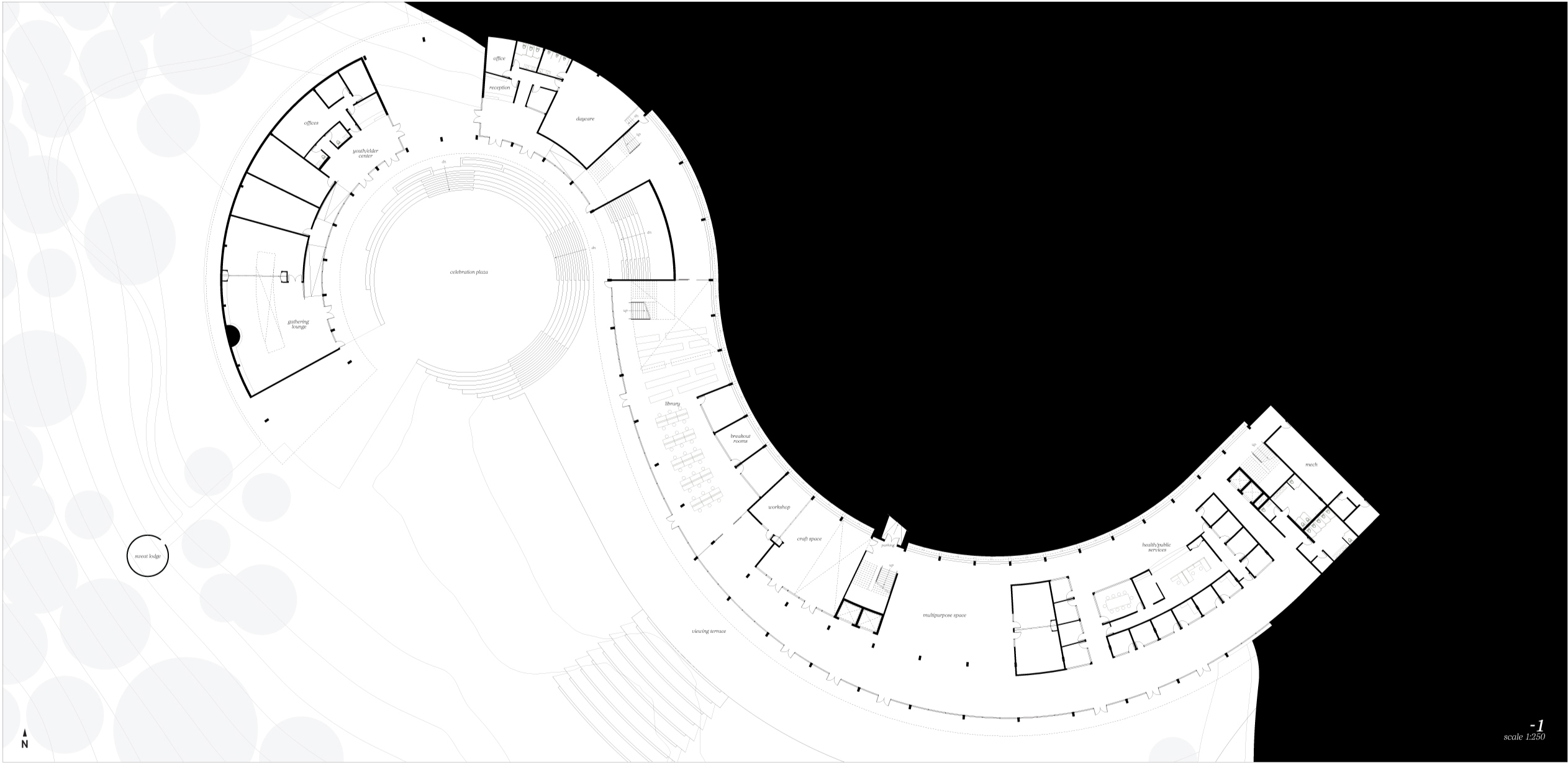
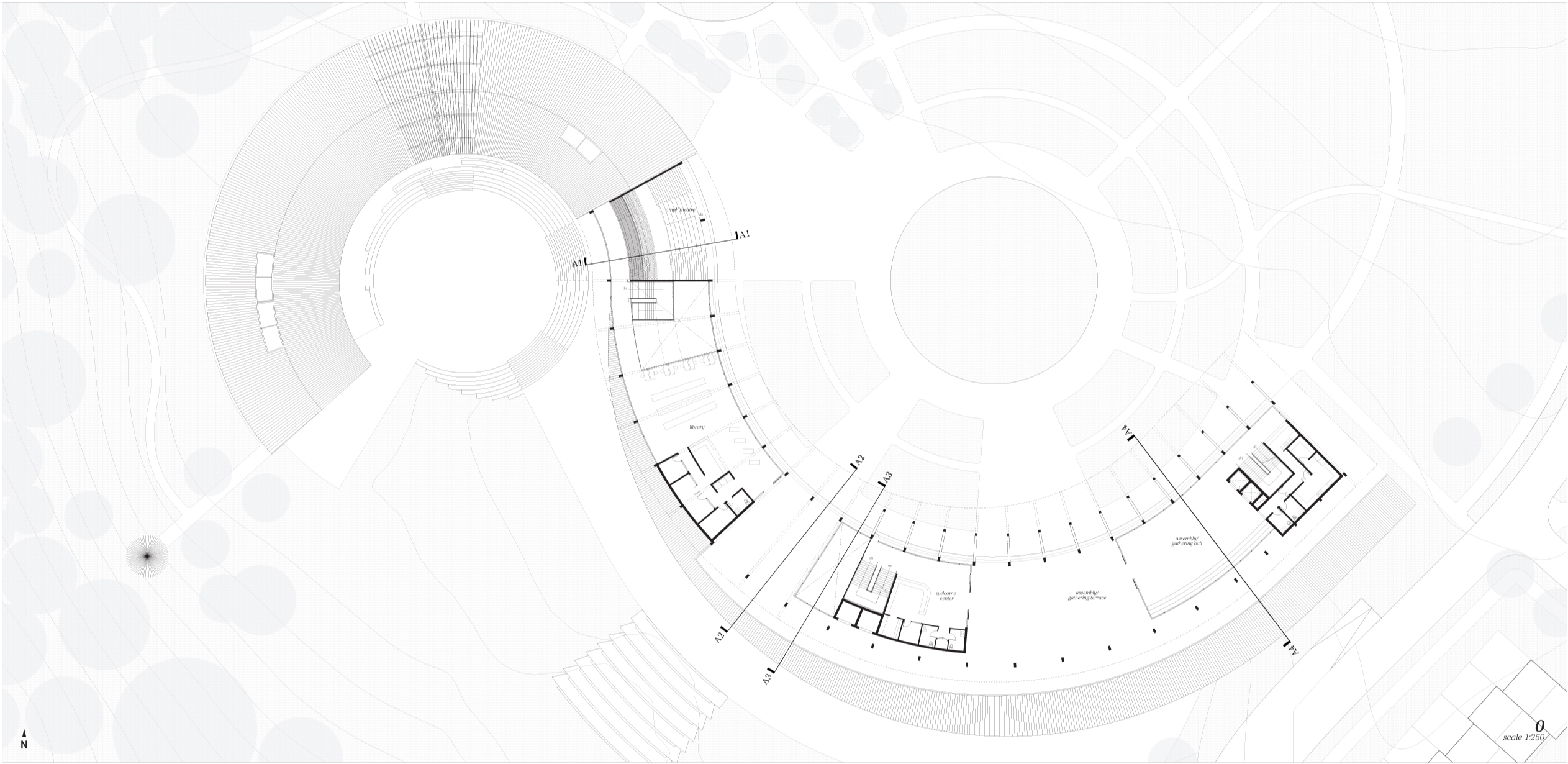
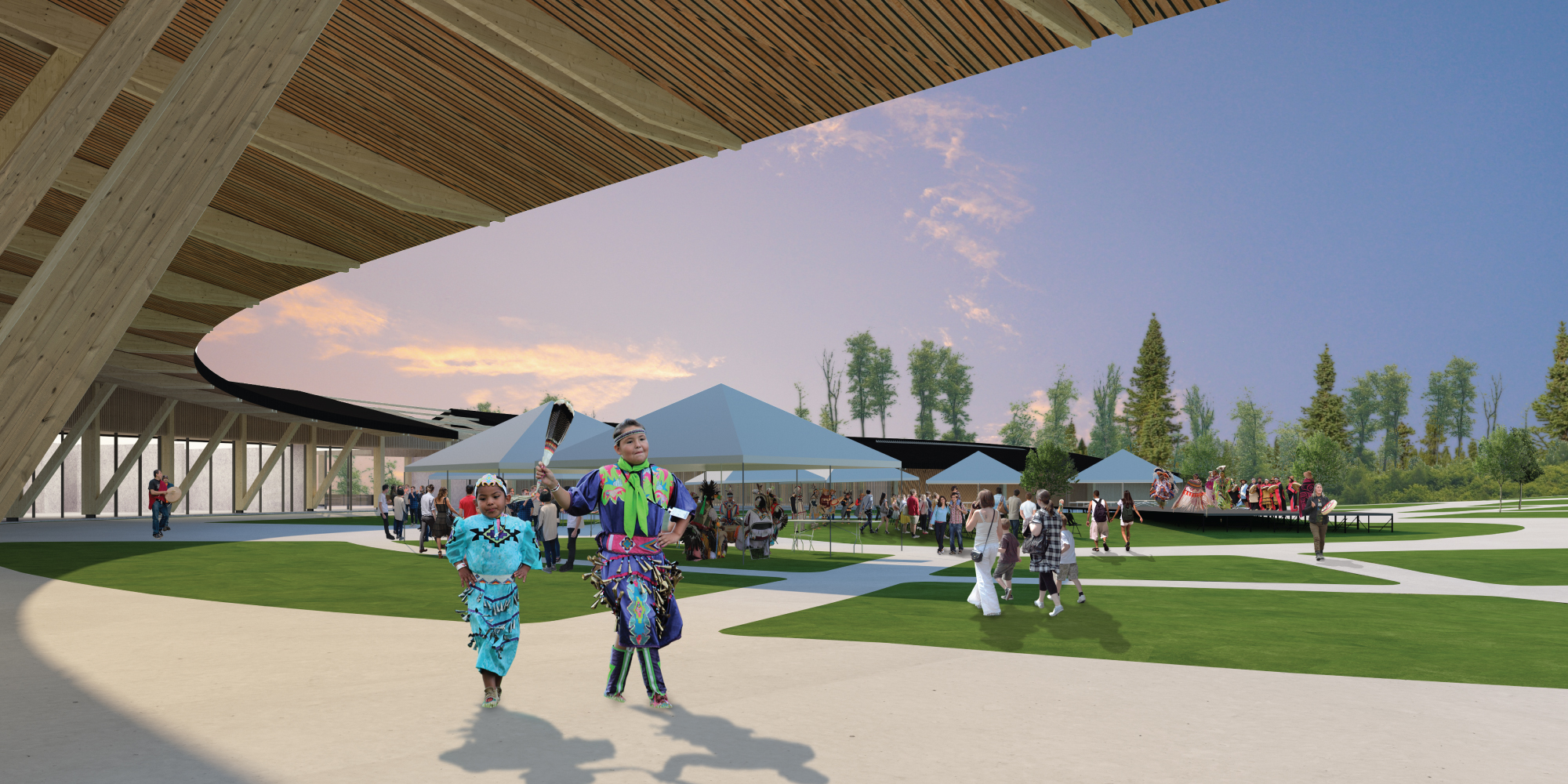
The All Nations Gathering Place is essentially a long continuous roof that is draped along the natural topography of the site. The roof blends the interior and exterior spaces creating a porous building to visually and physically connect the inhabitants to the natural environment. The porosity of the building also fosters passive and active social interactions as well as provides the opportunity of the program within to spill out.
Plans
Site Plan
Lower Plan
Upper Plan
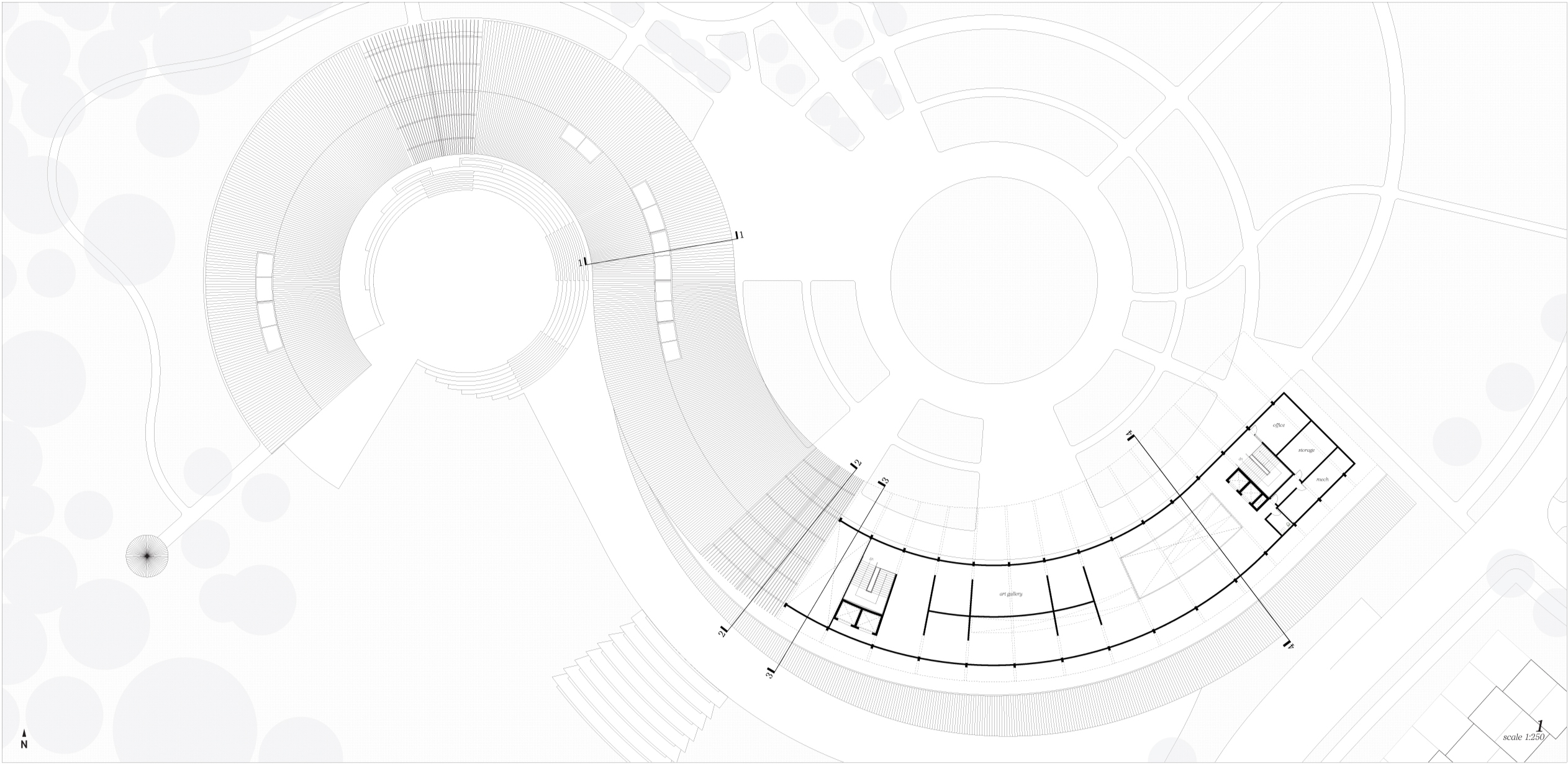
Level 1
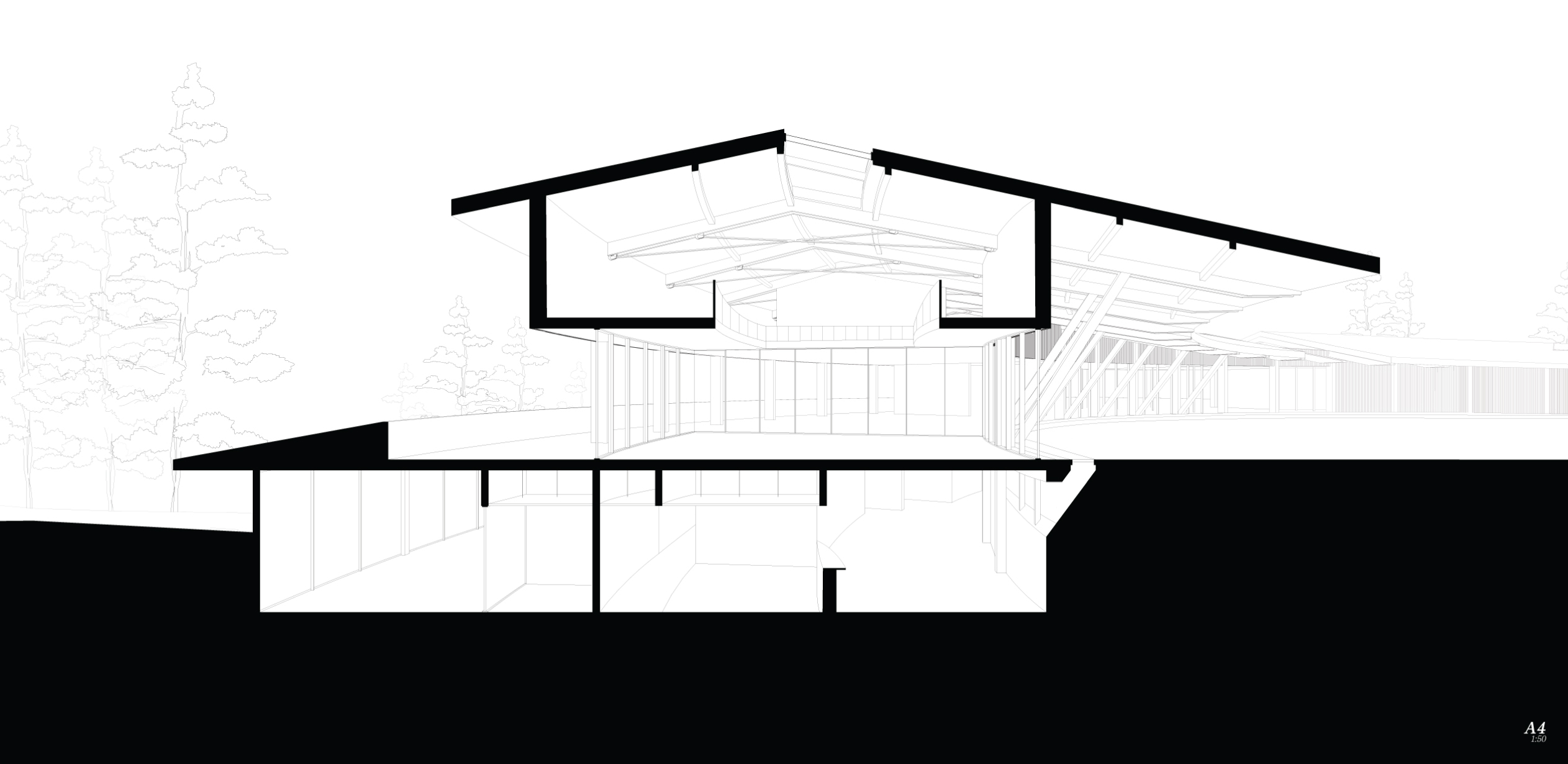
Sections
Auditorium

Breezeway
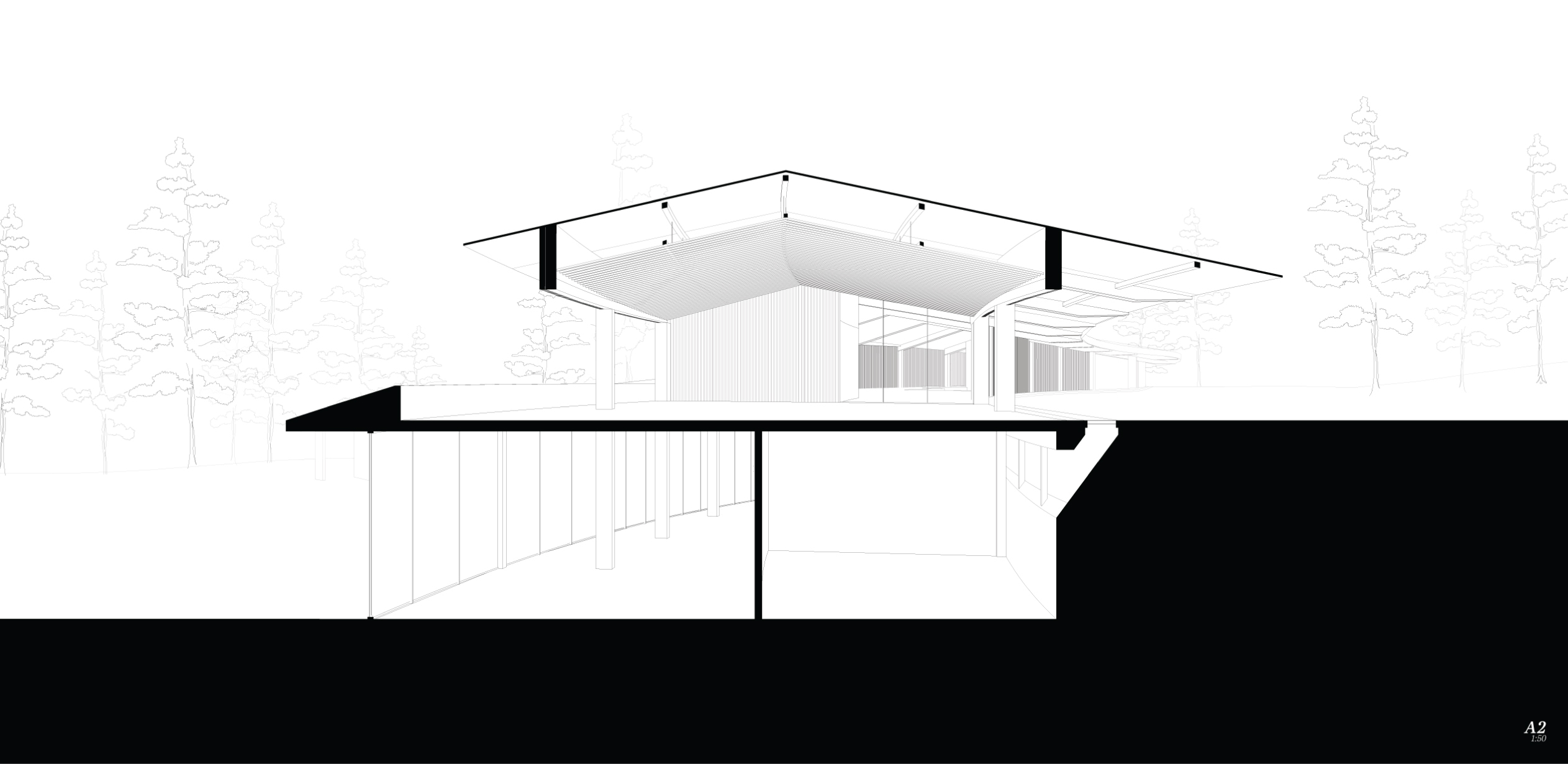
Triple Height Space
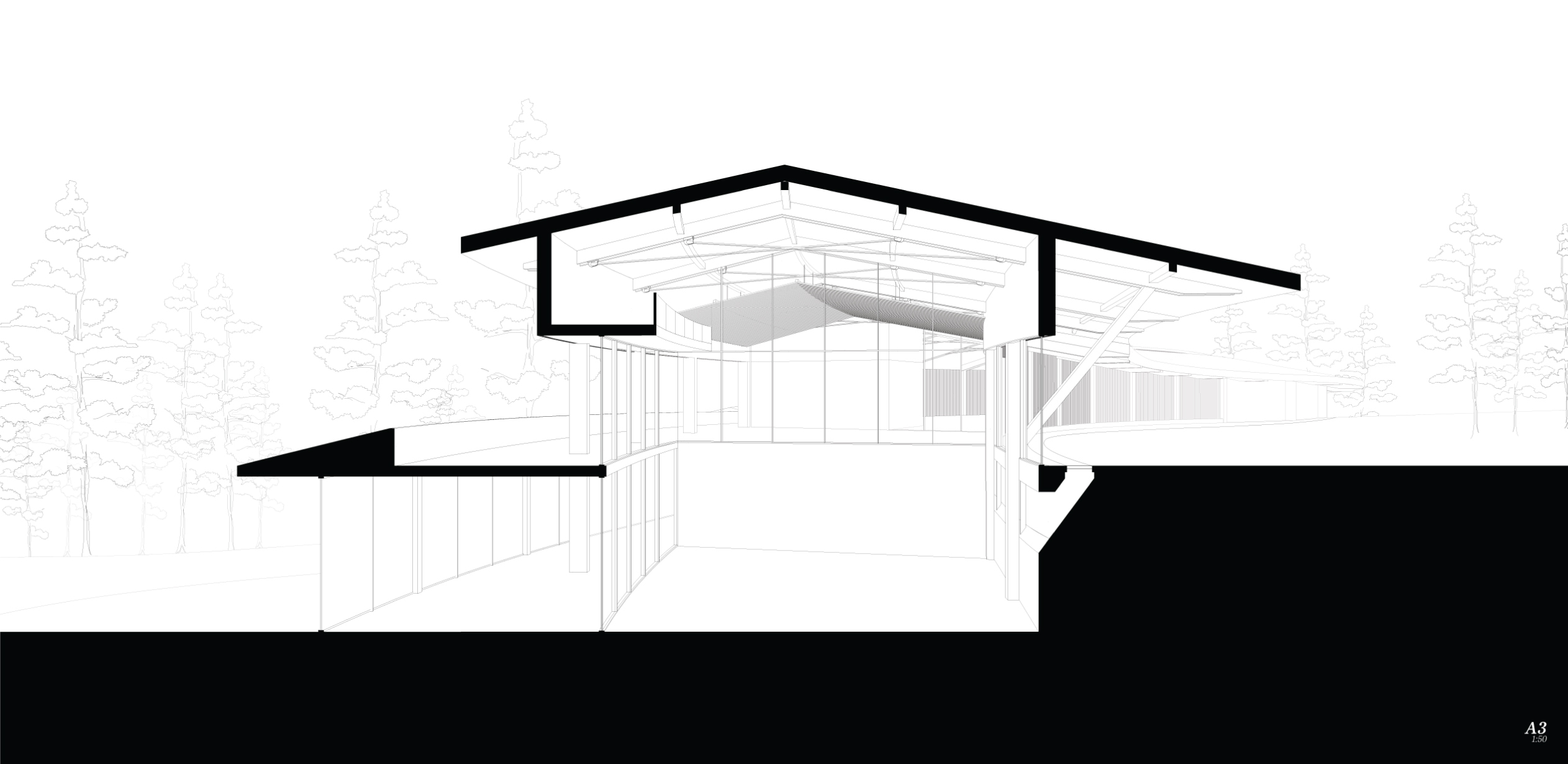
Art Gallery and Gathering Space
Process
The project was derived from engaging the community in two different ways with two different groups of inhabitants. The first engagement came in the form of a stakeholder workshop which invited local service providers, legislators and FRANAS to help us identify the needs of the community. For the workshop we designed tasks to essentially ask three questions 1: What do you see as the greatest needs for the Aboriginal community? 2: What interventions are necessary to meet the needs of the community. 3: What spaces are needed to support these interventions in Maple Ridge.
With the findings from the stakeholder workshop, we then reached out to the broader Indigenous community of Maple Ridge during Aboriginal day to help us validate our results of the stakeholder workshop. In a way they help us prioritize what should come first.
Translation
To begin translating what we heard from our workshops to a design proposal we began by breaking down what we heard during the workshops. The most prevalent message we got was the lack of a sense of belonging in the community. We started by unpacking what that meant and how it could potentially inform architecture. We broke the word down into three words that we could then tease apart at different scales – connectivity, inclusivity and traditions.
Connectivity
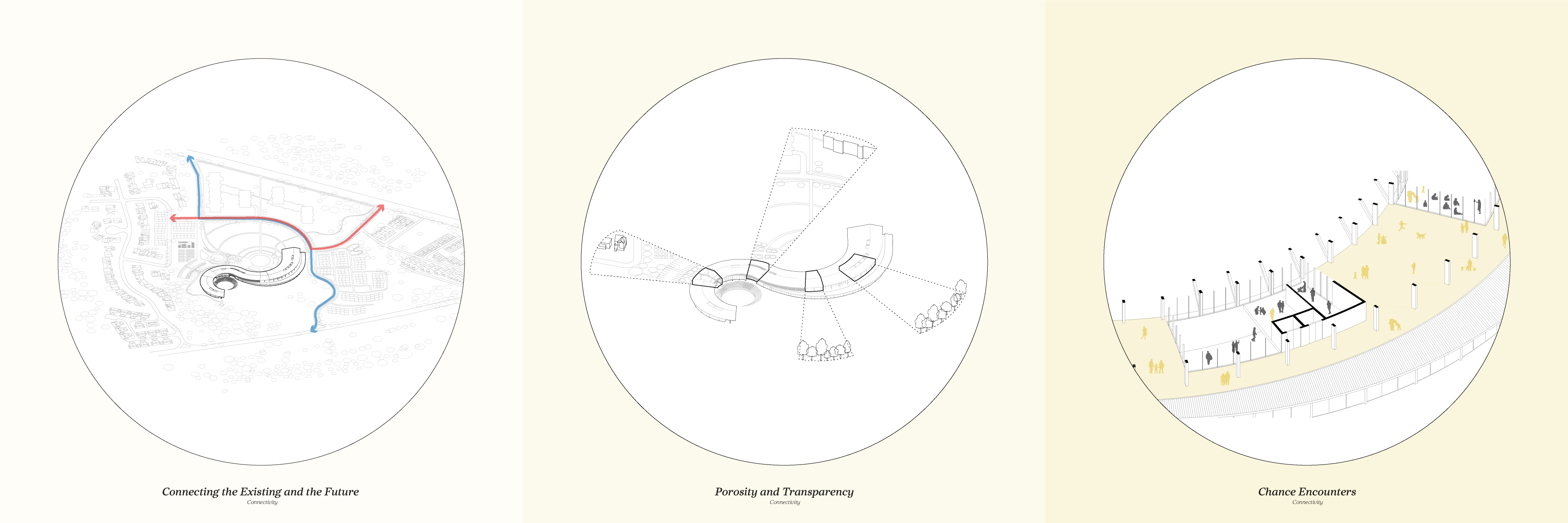
Site: To connect the site to the existing neighbourhood and the highway.
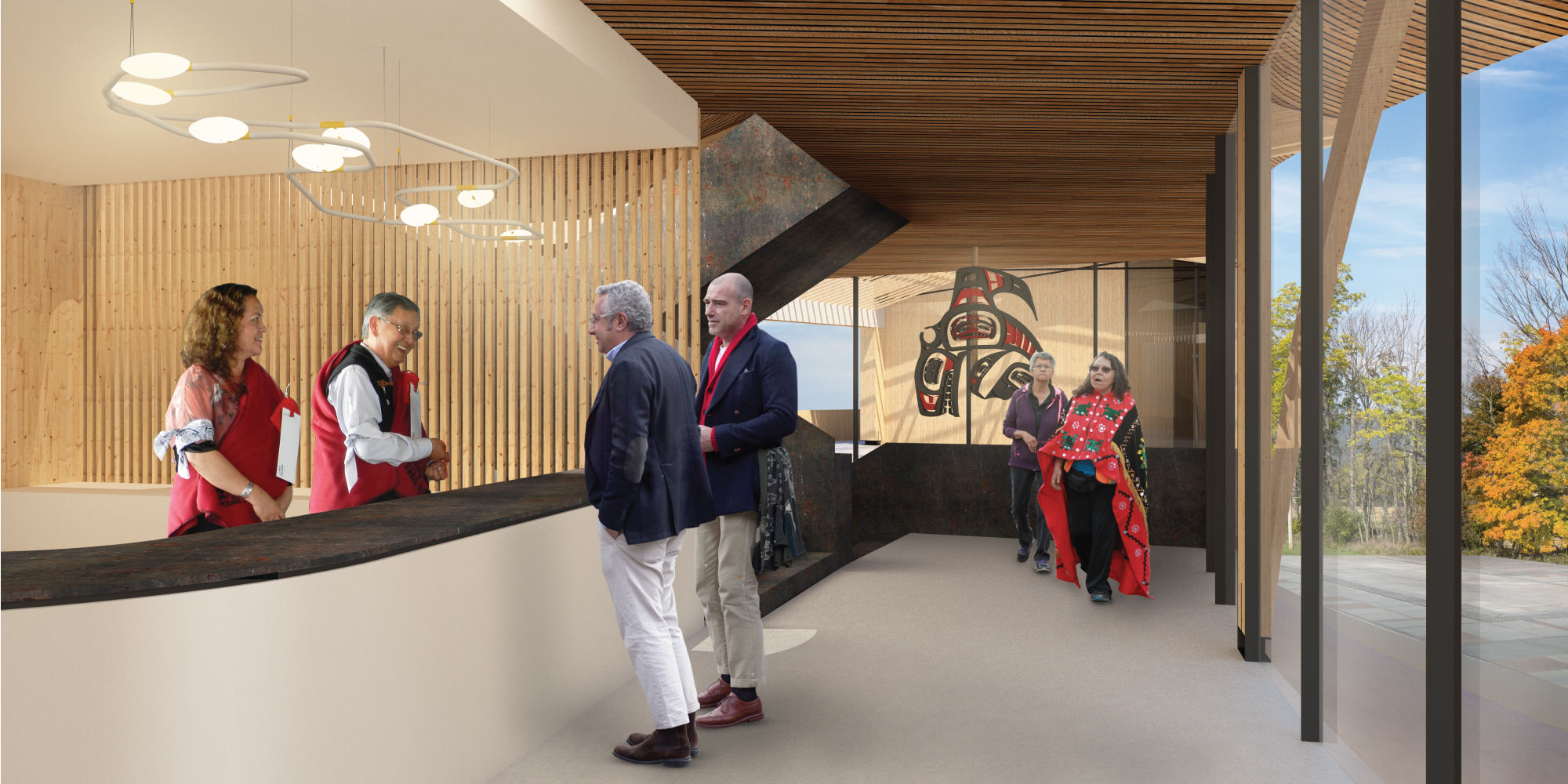
Building: To create a porous building with transparent materials on the ground to physically and visually connect the inhabitants to the surrounding environment.
Human: To create public breezeways to allow inhabitants to slip in and out the building creating potential chance encounters.
Inclusivity
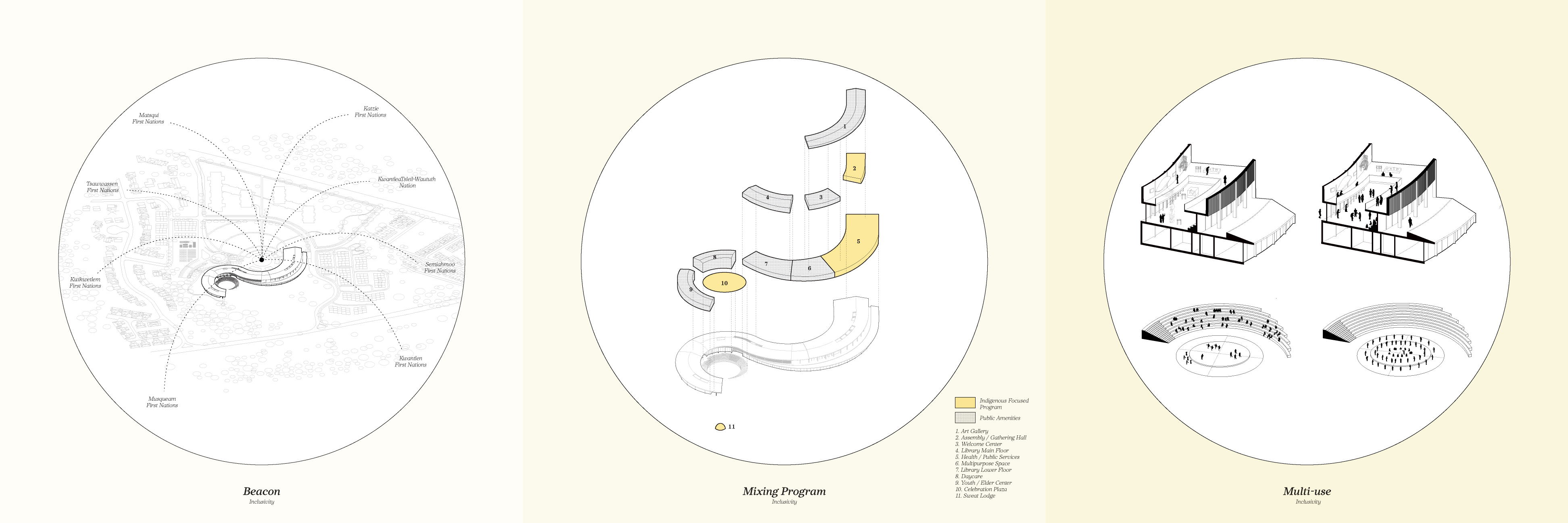
Site: The building should be a beacon and a place for all nations, a stopgap between those who live on and off reserve – a home away from home.
Building: Mixing public and traditional program to celebrate diversity as well as increase potential social exchange.
Human: Increasing the multi-use potential of the program. For example when the gathering place is used for ceremonies, the inhabitants can spill in the the art gallery above to increase the volume of the space. The exterior ceremonial can also be used as an exterior stage or a reading nook.
Traditions

Site: To orient the building to the cardinal points, a method traditionally use to situate plank houses. The backside to the mountains, the front towards the water and the long edges towards the East and West axis.
Building: The building pays homage to the traditional long house typology. The circle prevalent in the culture is used as a beginning point to derive the form of the building.
Human: Simple post and beam construction that was intended to be a modern interpretation of the plank house.
Renders
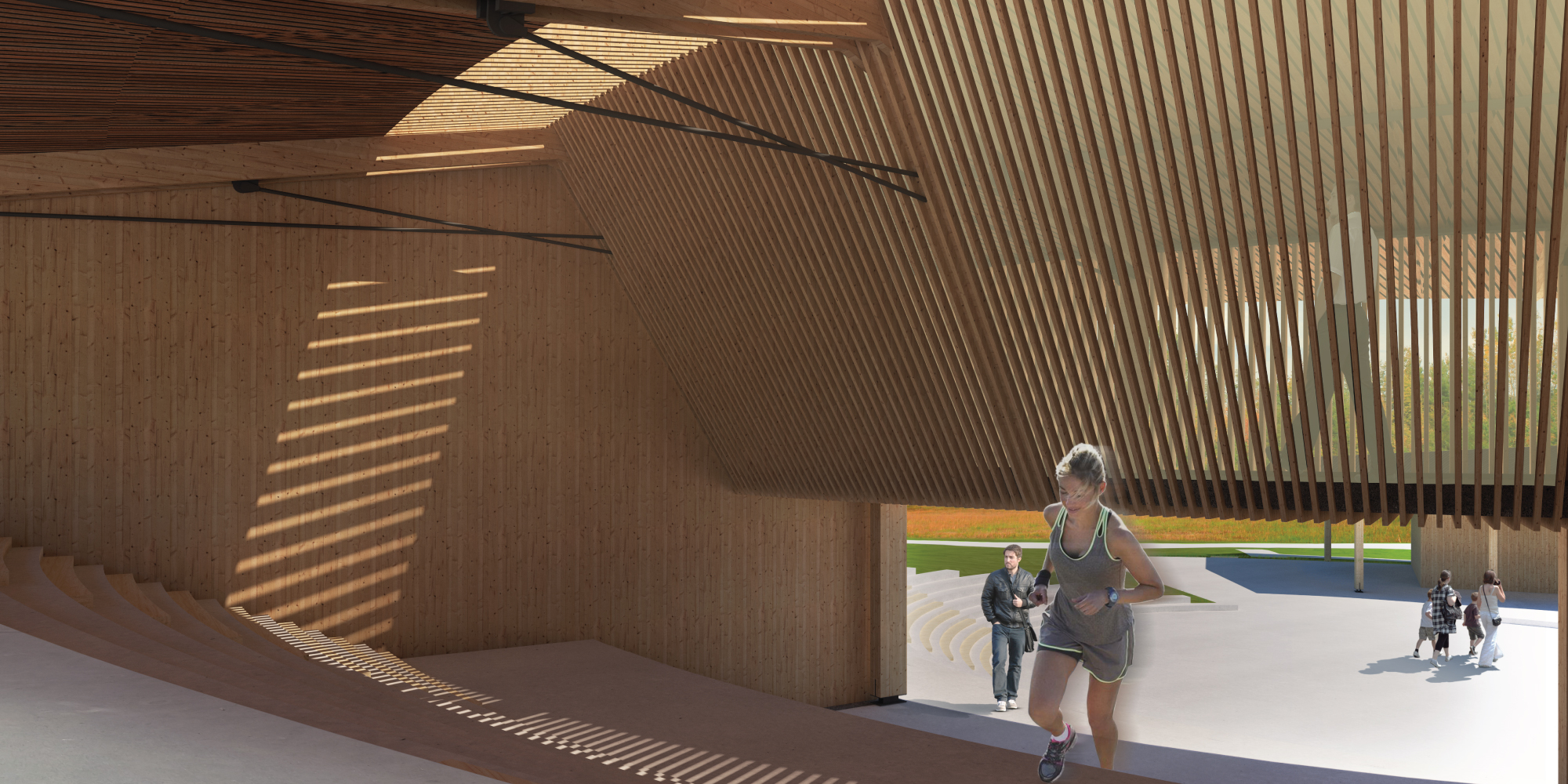
Auditorium
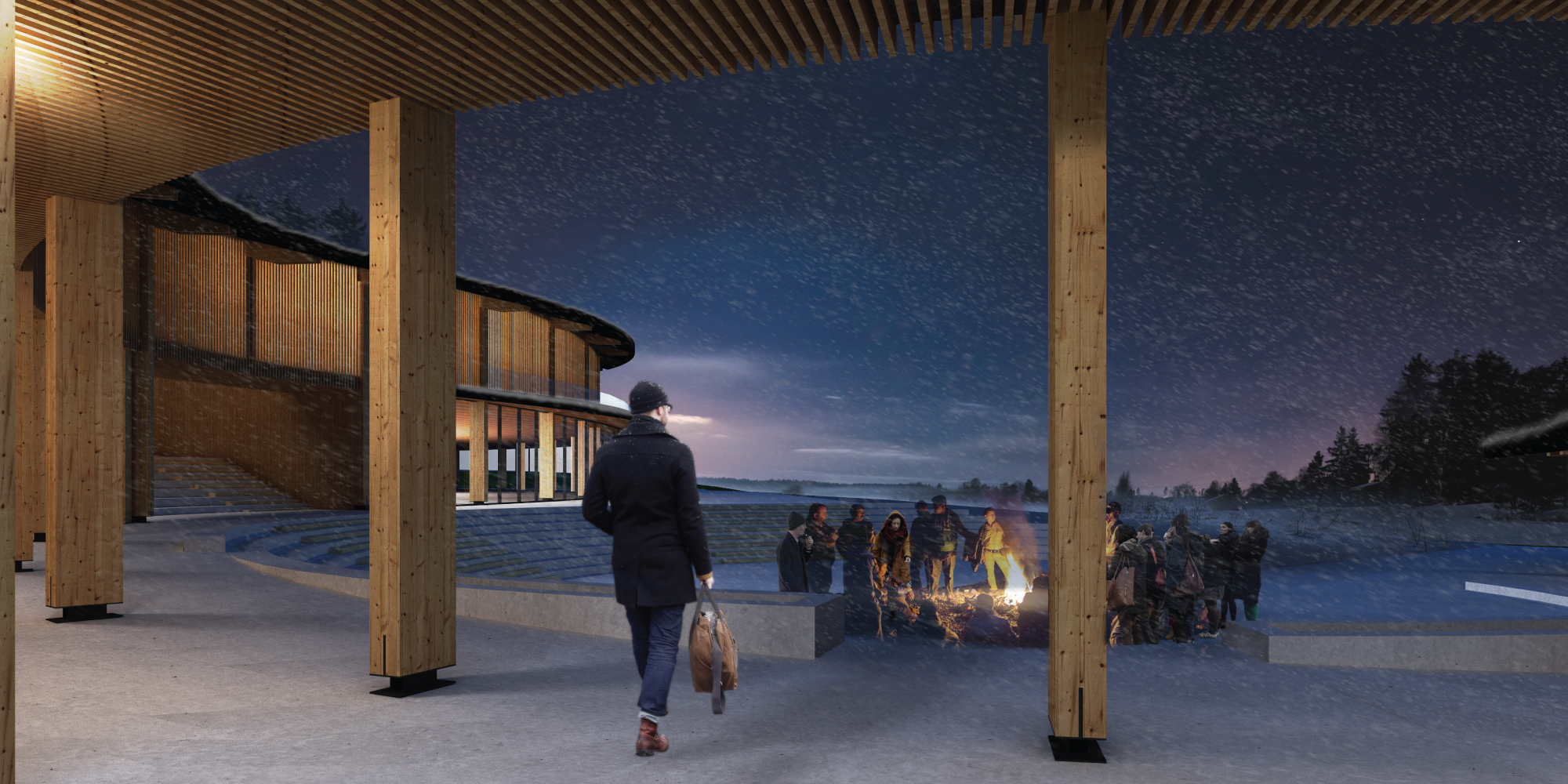
Ceremonial Space
Upper Ground floor
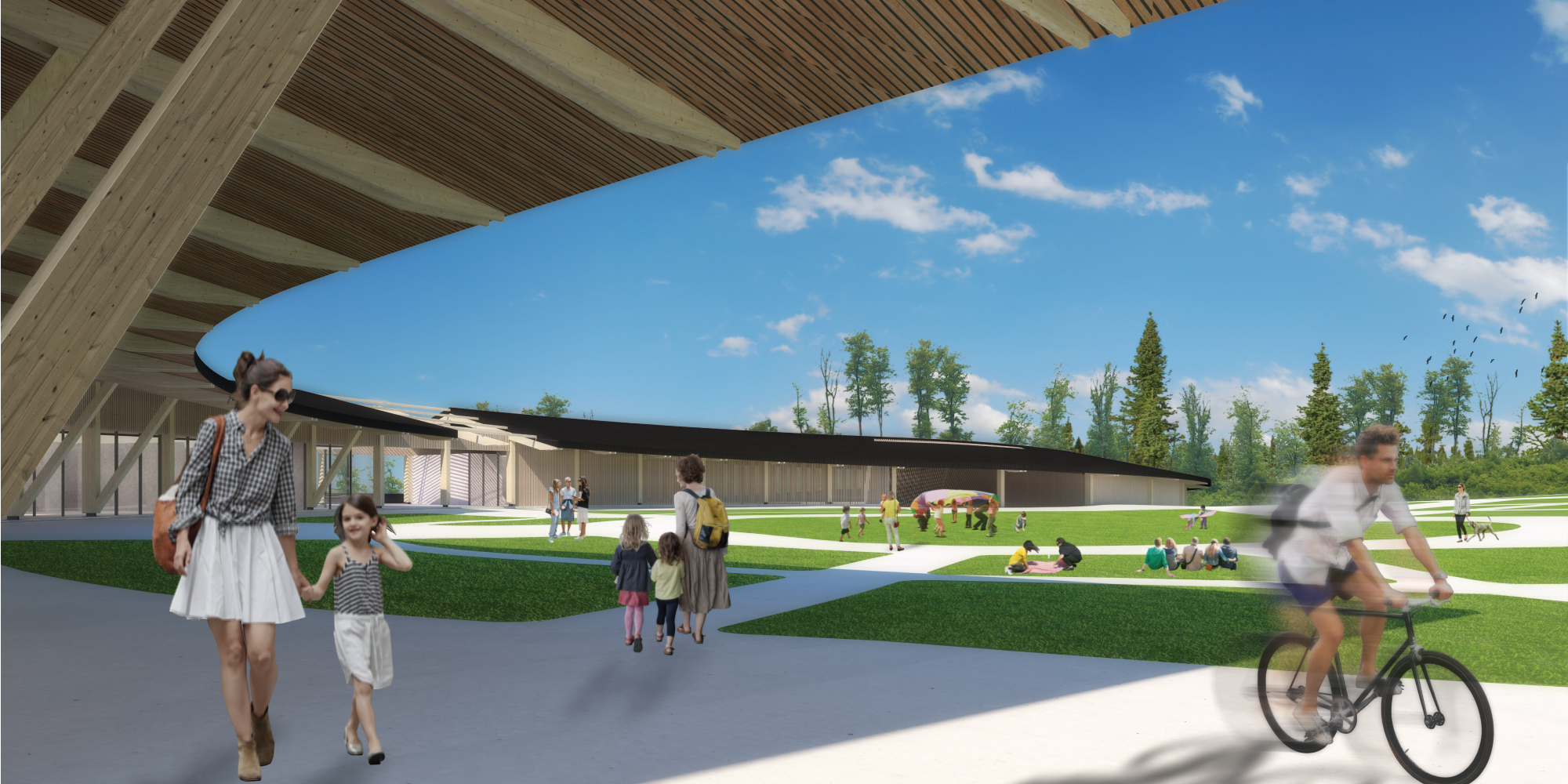
Upper Ground floor during Aboriginal Day
Welcome Center
Credits
Vince Castanon